
 Kenya
Kenya
 Rwanda
 Tanzania
 Uganda

 Ethiopia
Published: May 13, 2026 | By Billion Events
It’s the morning after Africa Forward Le Concert, and Nairobi is settling.
The arena is quiet now. The rigging crews are already dismantling what took weeks to build. Presidents Ruto and Macron have been escorted back to their residences. Nairobi’s traffic, briefly rerouted for motorcades, has returned to its reliable chaos
And the events industry, as it always does, wakes up the next morning and gets back to work.
But before we do that, before the next brief lands and the next site visit is booked and the next production meeting is scheduled, we want to talk about last night. Not as fans reviewing a concert. As professionals reviewing a production.
Because Africa Forward Le Concert was not just a great night. It was a case study.
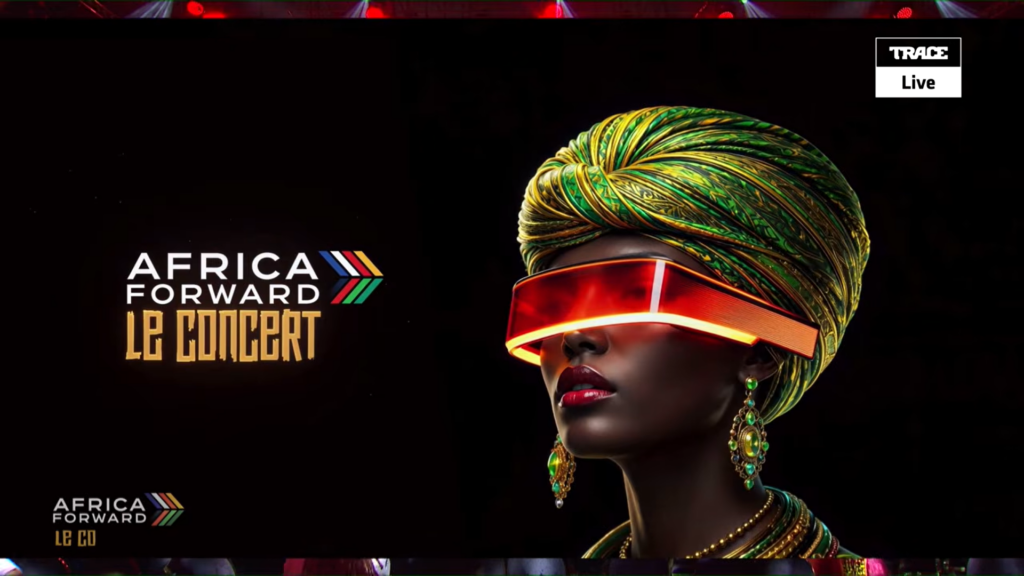
Table of Contents
Africa Forward Le Concert: What the Arena Looked Like Before the Show Started
Let’s start with the infrastructure, because this is where the story really begins.
The Africa Forward Le Concert was organised by TRACE East Africa, with Safaricom as the technical broadcast partner, and Kenya Airways serving as the official airline partner, flying in international artists from across the continent. This was not a loose arrangement. Every one of those partnerships had a specific operational role, and you could feel it in the execution.
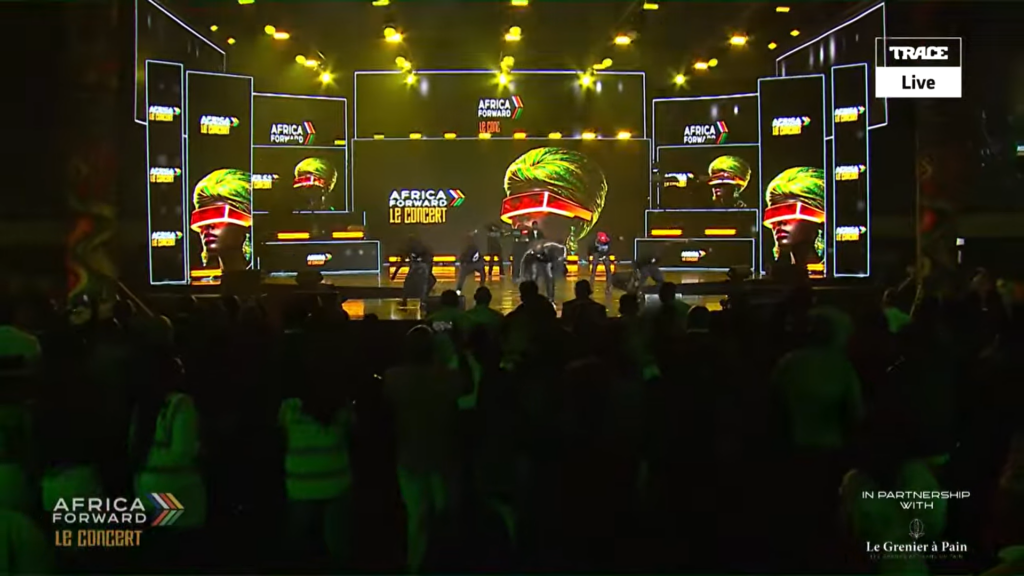
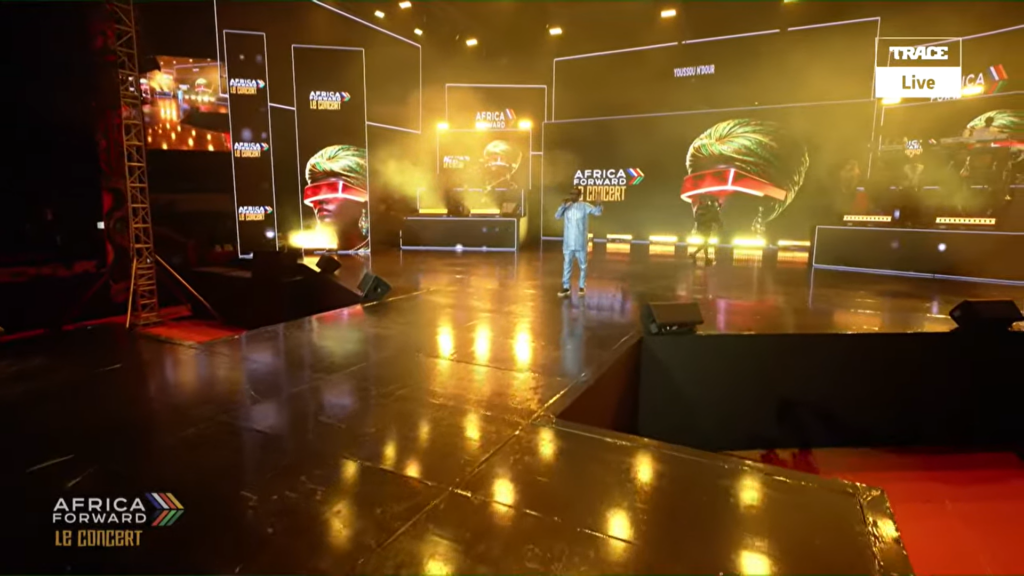
The evening opened with a green carpet hosted by KBC journalist Kalondu Musyimi, who welcomed Presidents Ruto and Macron to the arena, having just days earlier been crowned Top African Showbiz Reporter of the Year at the Africa Golden Awards. That casting choice mattered. The floor was held by a Kenyan journalist who earned her position on merit, on a night that was being watched across the continent.
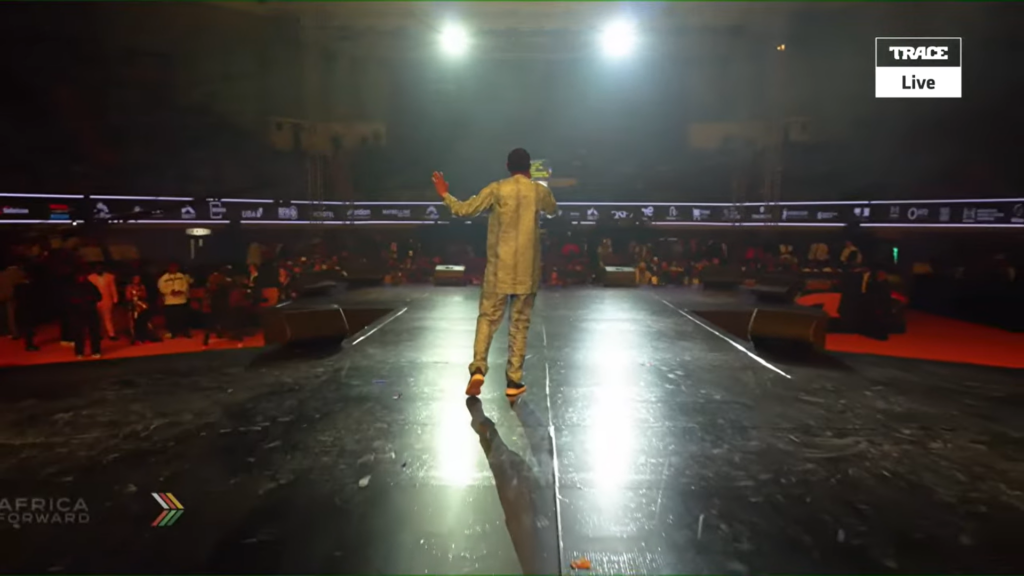
Inside the arena, the transformation of Kasarani was immediately visible. Weeks of intensive retrofitting had replaced the sports facility’s standard configuration with a concert production of genuine scale. The screens were outstanding, large format, high resolution, capable of holding a global broadcast standard. The lighting rig was designed for a show, not a match. The staging gave every performer room to work.
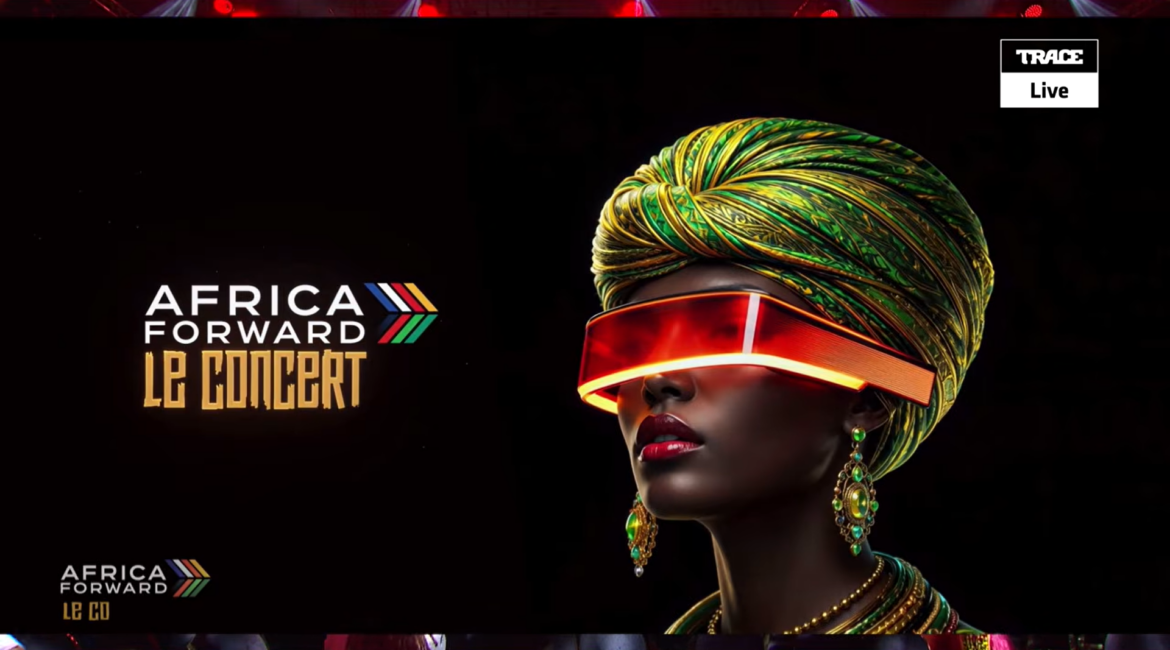
Before each artist took the stage, the audience saw an intro video. Cinematic, sharply edited, some with that distinctive digital texture that sits somewhere between AI-assisted production and very high-end videography. Each video felt personal to the artist, biographical, intentional. In an evening of this scale, those transitions matter more than people realise. They hold the audience, build anticipation, and give the production team time to reset the stage without the room going cold.
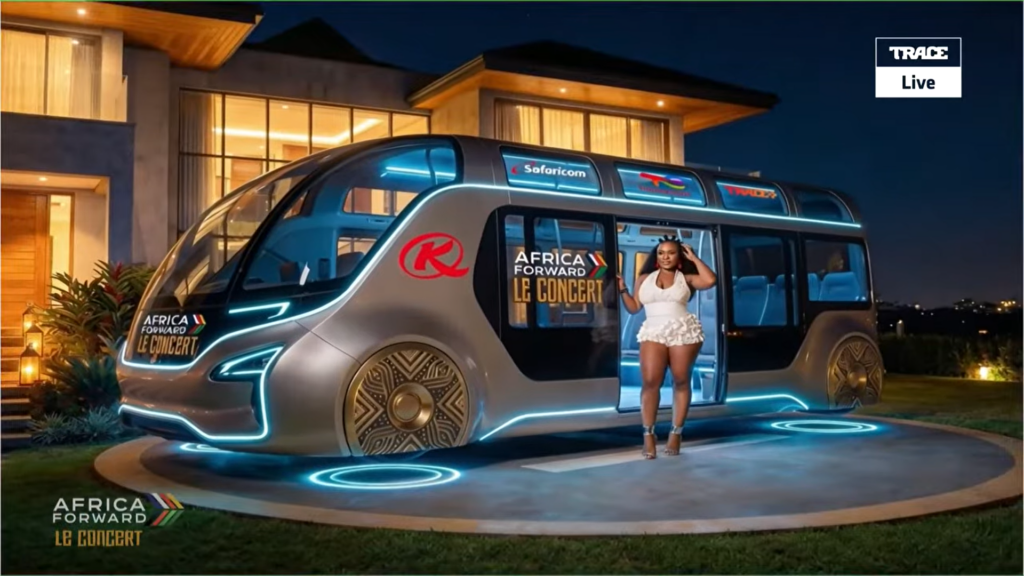
The concert was also streamed live on YouTube, which meant it was not just for the 3,500 in the arena. It was for the continent. That reach is part of the brief. When you close the Africa Forward Summit 2026 with a cultural event, the broadcast is the event as much as the room is.
The Mathare Poet: The Moment Nobody Will Forget
Before the music started, a 15-year-old girl from Mathare walked onto that stage.
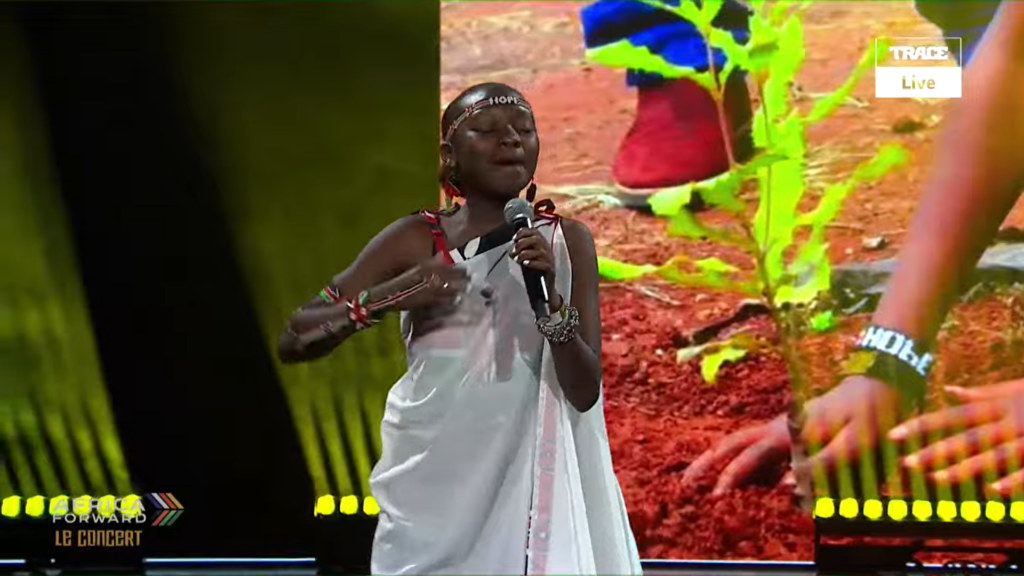
In front of Presidents Ruto and Macron, in front of heads of state from across thirty African nations, in front of the cameras broadcasting live to the continent, she delivered a poem.
The Mathare Kids Talents Hub was part of the official lineup for Africa Forward Le Concert alongside the Karura Gospel Choir, placed there deliberately, not as an opening act to warm up a distracted room, but as a statement. This is who Africa is. This is where the talent lives. This is what investing in the creative industry actually means.
From an events standpoint, that was the most precise piece of programming in the entire evening. You could have opened with any of the headliners. They chose a teenager from one of Nairobi’s most underserved communities. That decision elevated the night from a concert into a conversation.
When Fally Ipupa Did Not Show Up: How a Production Handles the Unexpected
Fally Ipupa was not at Africa Forward Le Concert.
The Congolese superstar, one of the most anticipated names on the lineup, sent a video apology that was played on the arena screens. No details were given. The show moved on.
From a pure production standpoint, how you handle an unexpected withdrawal at this level tells you everything about the quality of the team running the floor. The announcement was clean. The video was shown. The programme did not stall. The audience absorbed it and stayed with the show.
There will be a conversation about Fally’s absence, and there should be. When you are on the lineup for an event of this significance, under the patronage of two sitting presidents, watched live across the continent, the bar for what constitutes a valid reason not to appear is high. That conversation belongs in the industry.
What the production team deserves credit for is not letting that moment become the story of the night.
The Performances: A Night Built in Acts
Africa Forward Le Concert was structured in deliberate acts, building in intensity toward a closing sequence that had its own name.
Savara, speaking during rehearsals, described the night as a defining moment for Kenya’s creative industry: “We have worked hard to create structure, and this is the time to push the nation and our agenda forward. Being able to be in the midst of the greats, I’m so thankful.”
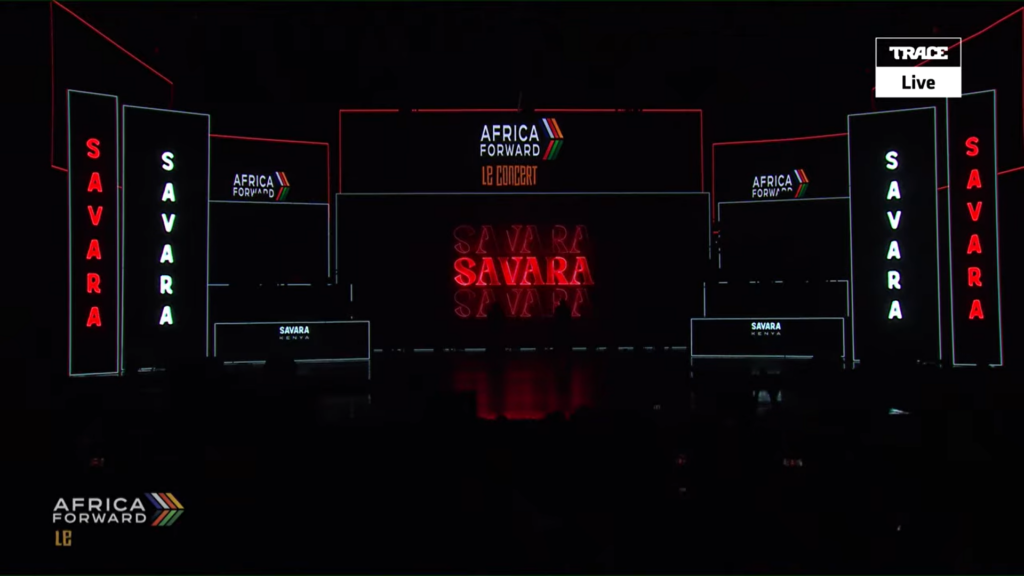
That feeling was audible in the performances.
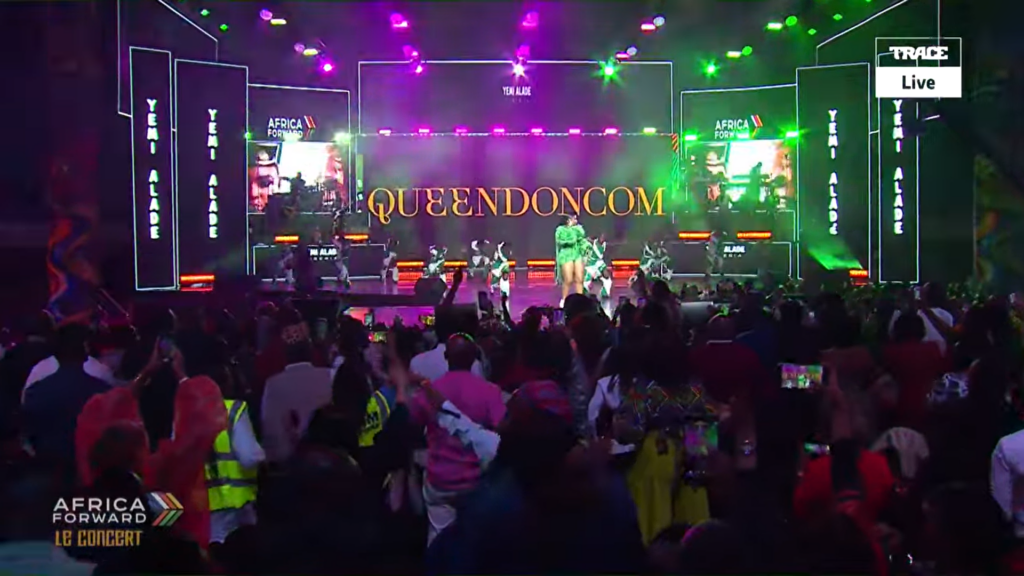
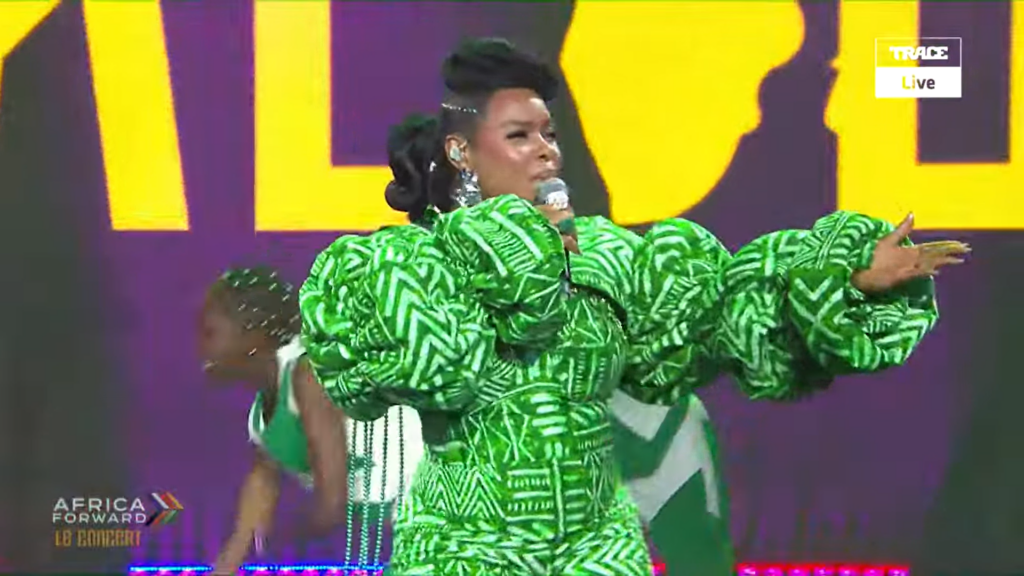
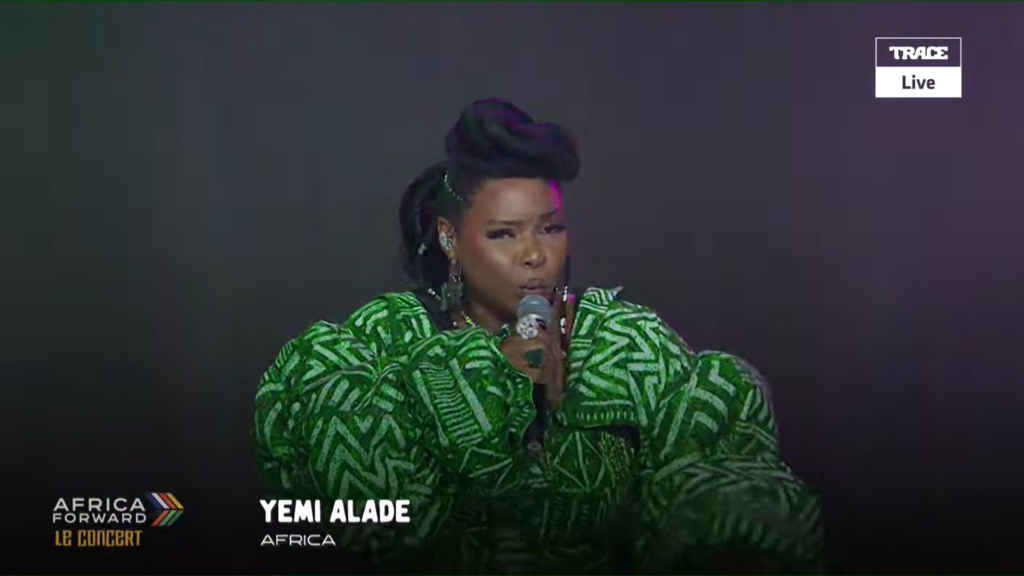
Yemi Alade was the undeniable peak of the first half. Nigeria’s Mama Africa commanded the Kasarani stage the way only someone who has spent years earning those rooms can. Her energy, her stagecraft, her vocal delivery, all of it was at the level you bring when you know the world is watching. In a pre-show interview she had said: “When the world tries to forget us or keep us behind, the music pushes forward — a reminder that we exist and we are here.” She made good on that promise.
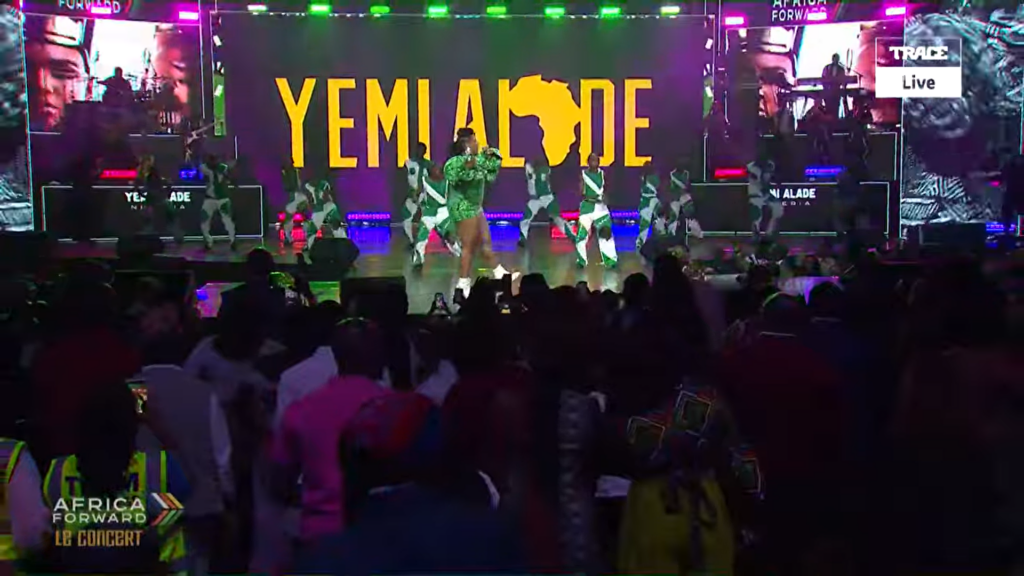
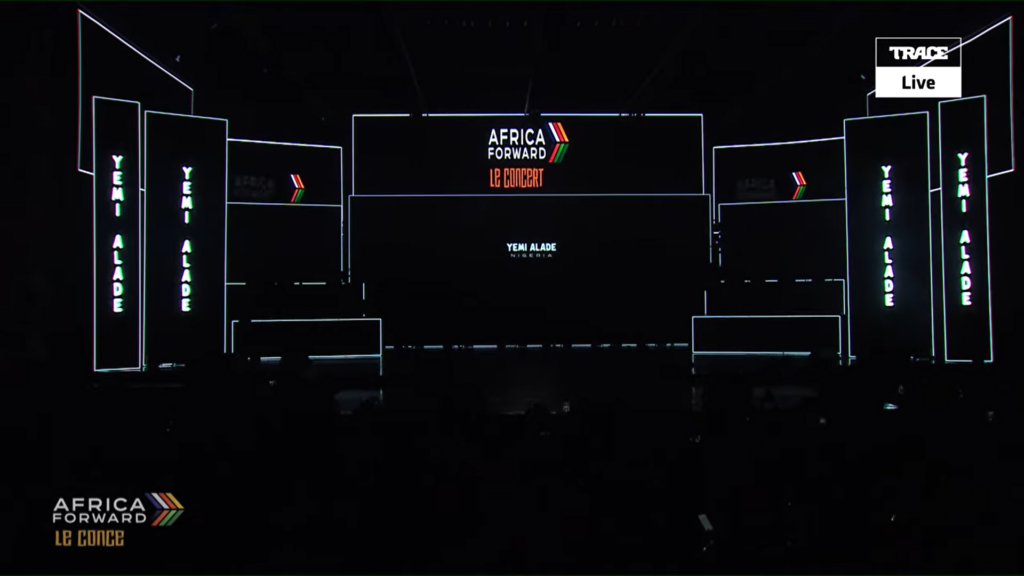
Nandy (Tanzania), Jose Chameleone (Uganda), Nomcebo (South Africa), Coster Ojwang (Kenya), and Abigail Chams (Tanzania) each brought their country’s energy into the room. This was East Africa, Southern Africa, West Africa, and Central Africa performing together, in Nairobi, for the leadership of thirty nations. The pan-African symbolism was not decoration. It was the architecture of the night.
The Finale: Three Meanings in One Song
The final act was billed as the Finale, and it earned the name in ways the organisers clearly intended.
Bien-Aimé Baraza opened his set with “Suzanna,” the song that has followed him across every stage he has ever walked onto. That opening, the unmistakable “oooh Suzanna,” lands differently in a room of this size. It is a declaration that he is home, that this stage belongs to him as much as it belongs to anyone.
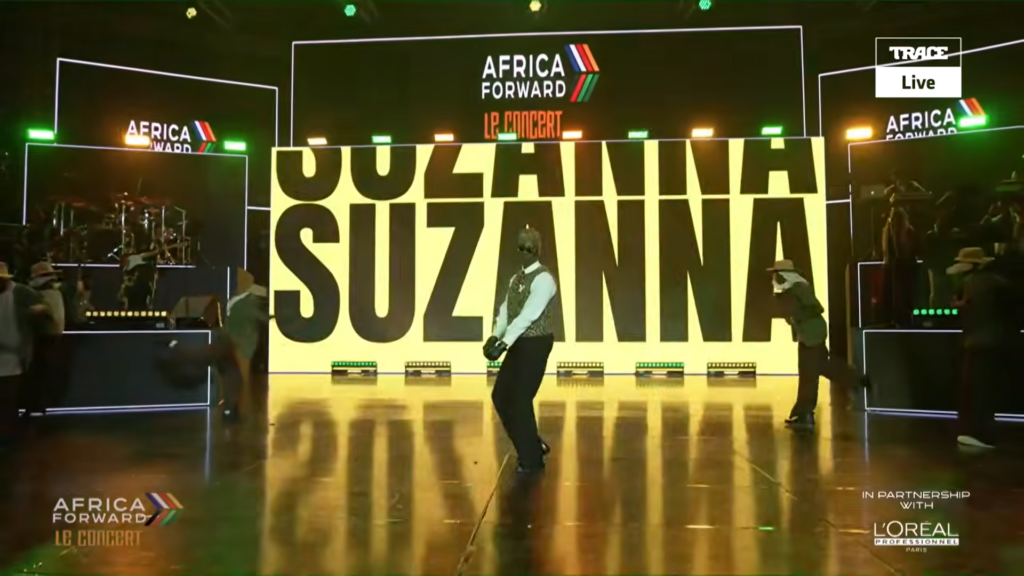
He did what he does. He read the room, worked it, built it.
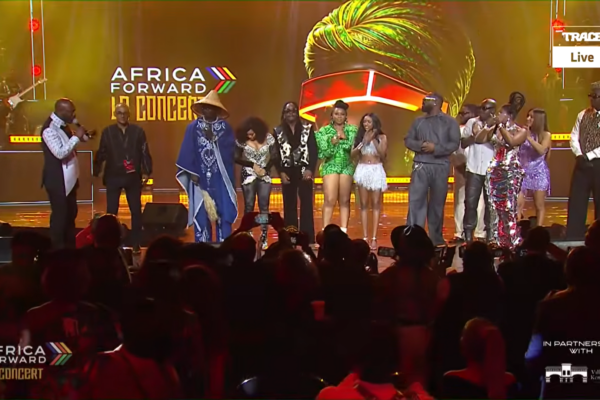
Then came the closing sequence. The song “Finale,” featuring Alikiba, closed Africa Forward Le Concert in the most intentional way possible. The word carries three meanings simultaneously: the finale of the concert itself, the finale of the entire Africa Forward Summit 2026, and the title of the song. All artists were brought back onto the stage. The full continental lineup, together, closing the night as one.
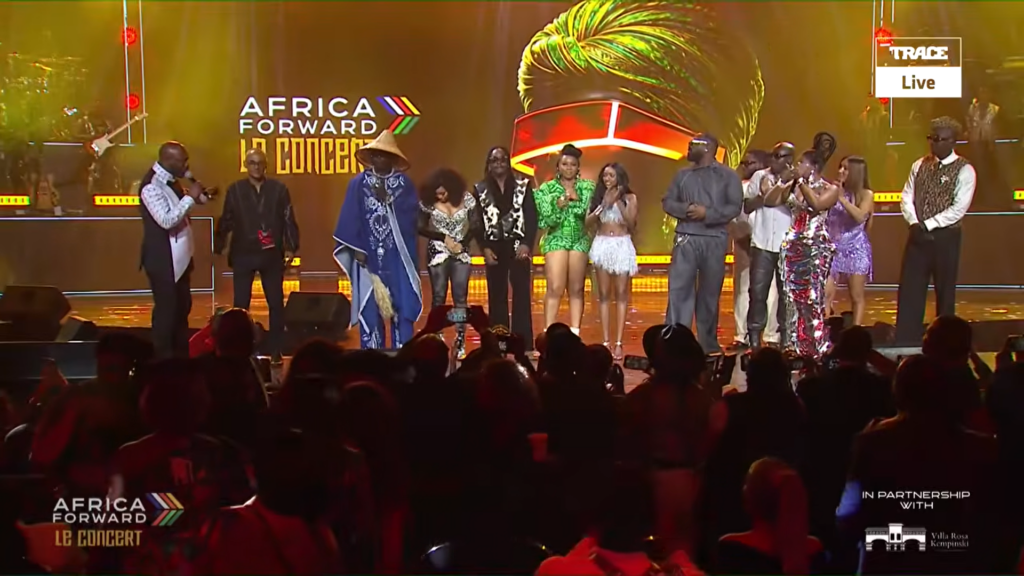
That is not an accident. Someone in the production brief said: the last image of this night should be every African artist on this stage together. That is events thinking. That is cultural diplomacy made visible.
The concert ran until approximately 2am. Nobody complained.
The Partnerships That Extend Beyond the Night
Two announcements from the broader Africa Forward Summit 2026 ecosystem deserve attention from everyone in the creative industry.
Equity Bank used the summit week to signal a serious commitment to the creative industry, specifically around banking access, creative financing, and intellectual property protection for African artists. Equity Group’s CEO James Mwangi participated in the joint CEOs pitch at the Business Forum alongside international partners, and the bank’s stated intention to support the creative economy structurally is the most consequential thing that happened this week for the long term health of the industry.
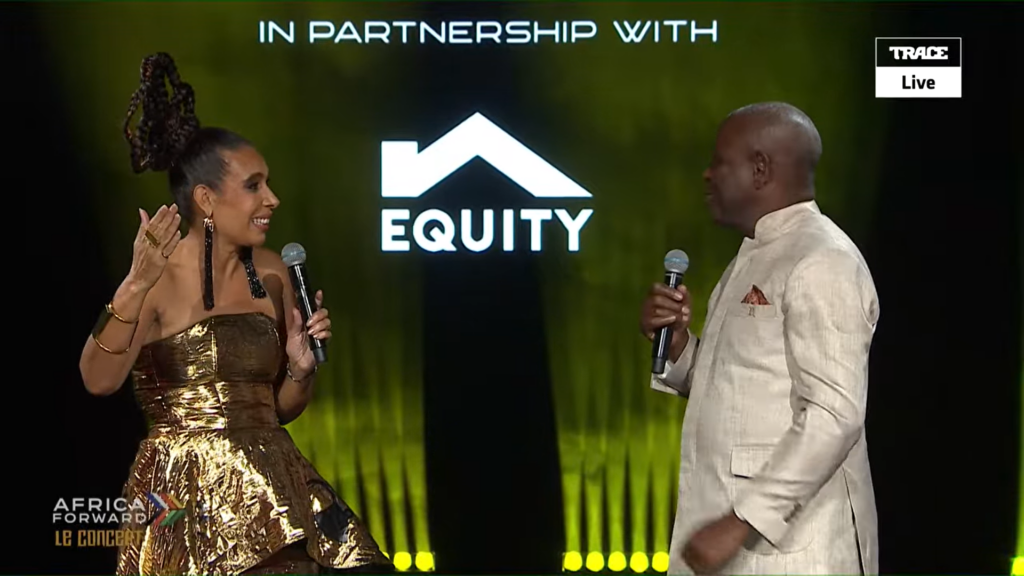
IP protection and creative financing are not headline-grabbing topics. But they are the infrastructure that determines whether the talent we saw on that Kasarani stage can build sustainable careers, own their work, and reinvest in the next generation coming behind them. That the conversation is now happening at the level of summit-week commitments matters.
Safaricom’s technical partnership with TRACE East Africa for the live broadcast of Africa Forward Le Concert is equally significant. The quality of the stream, the production value of the live broadcast, the reach it gave the night, that is infrastructure for the events and creative industry. When those partnerships are being built at this level, the ceiling for what East Africa’s live entertainment industry can deliver rises with them.
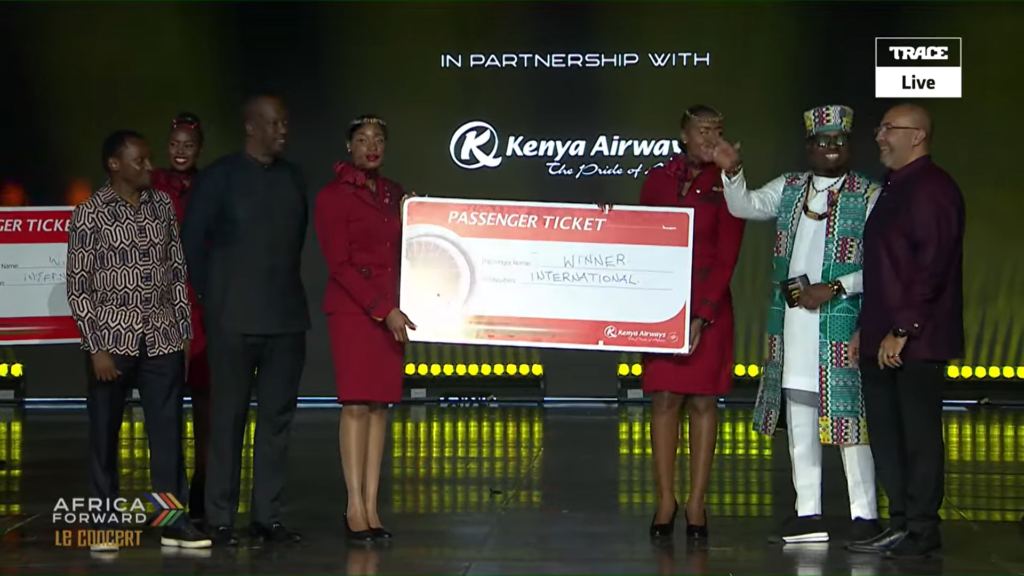
Kenya Airways as the official airline partner facilitated the logistics of assembling a continental lineup at short notice. That operational detail is invisible to the audience. It is everything to the production team.
The Standard This Sets, and What It Asks of All of Us
East Africa’s events industry delivered a show for Emmanuel Macron and William Ruto. For thirty heads of state. For a live audience of diplomatic and business leadership from across Africa and Europe, and a broadcast audience across the continent.
Jalang’o, speaking at the event, said: “There is no better way to close one of the biggest summits we have ever hosted here. This has never happened in East Africa before, given that the French summit used to be mainly in West Africa.”
He is right. And that is the new reference point.
Not what was considered “good for Africa.” What it actually was, by any global standard: a world class production, executed in Nairobi, by African event professionals.
That raises the bar for everyone operating in this industry. Including us. Especially us.
When a corporate client in Kampala or Kigali or Dar es Salaam asks you to run their regional summit, they now have a mental reference point for what East African events production looks like at its highest level. That reference point is last night.
We are. That is what our Uganda scouting trip was about. That is what the Africa Events Summit was about. That is what this whole company is built to do.
Where This Leaves Nairobi
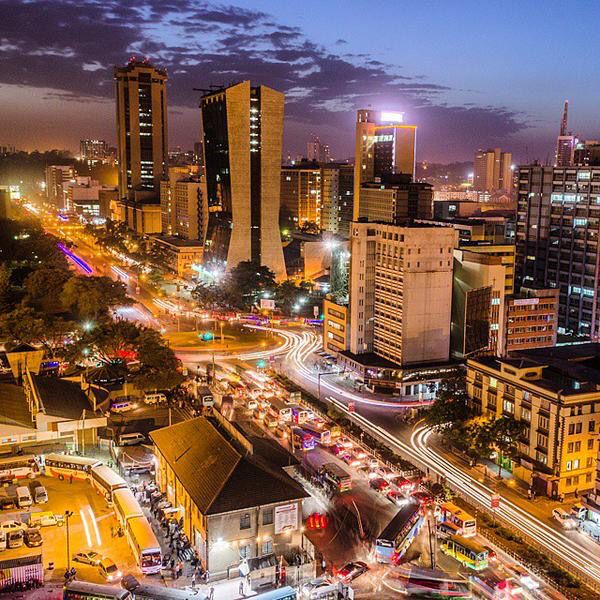
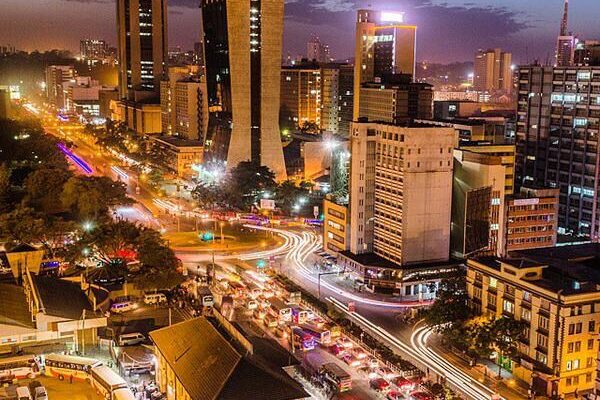
Nairobi is now the city that hosted the Africa Forward Summit 2026 and closed it with Africa Forward Le Concert, a show the continent will be talking about.
The events industry here has proven it can deliver. The venues have proven they can transform. The production teams have proven they can execute under the highest pressure. The artists have proven they belong on any stage in the world.
Now comes the work of making sure this was not a one-time demonstration, but the beginning of a standard.
That work starts this morning.
We are here for it.
Billion Events is East Africa’s events management and production company. We hosted the Africa Events Summit, Nairobi edition, in February 2026. Uganda is next. Rwanda follows. We build the events that define how East Africa is seen.
Plan your next event with us: plan@billioneventsea.com | +254 700 37 47 02 | billioneventsea.com
External references: TRACE East Africa | Africa Forward Summit 2026 official site
Leave a reply