
 Kenya
Kenya
 Rwanda
 Tanzania
 Uganda

 Ethiopia
AFRICA EVENTS SUMMIT
Nairobi, Kenya • 10–11 September 2026
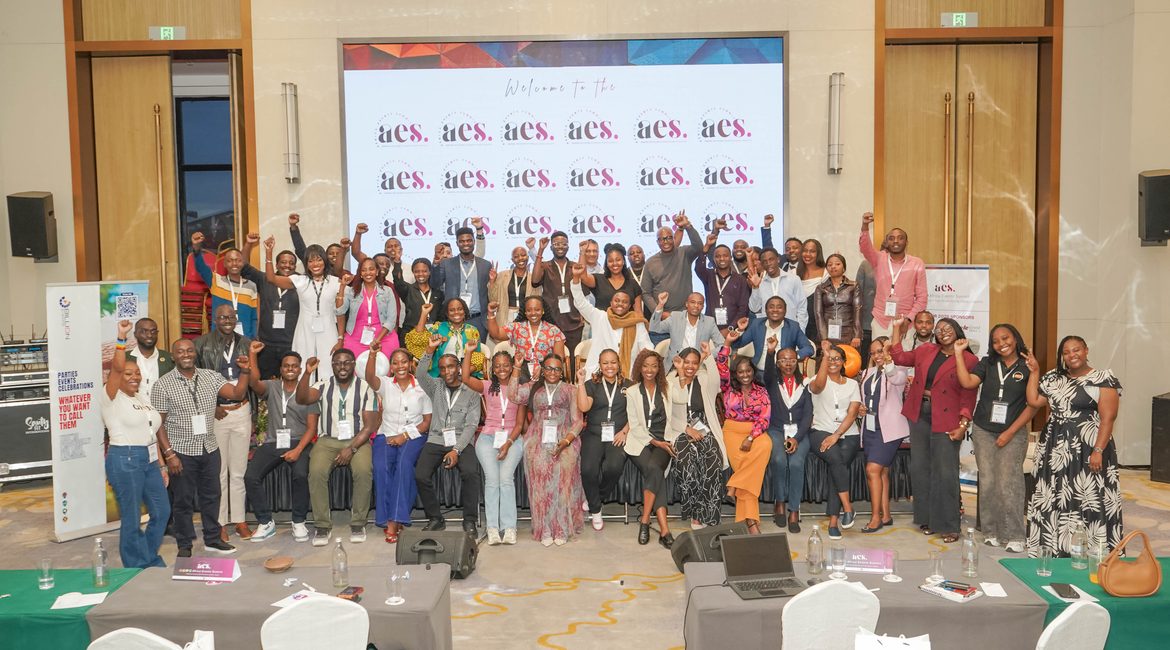
Over two days at Argyle Grand Hotel in Nairobi, delegates from Kenya, Uganda, Tanzania, Sierra Leone and the United Kingdom gathered under the banner of the Africa Events Summit 2026 to do something the region’s events industry had never done before: sit in one room and decide, together, what it needed to become.
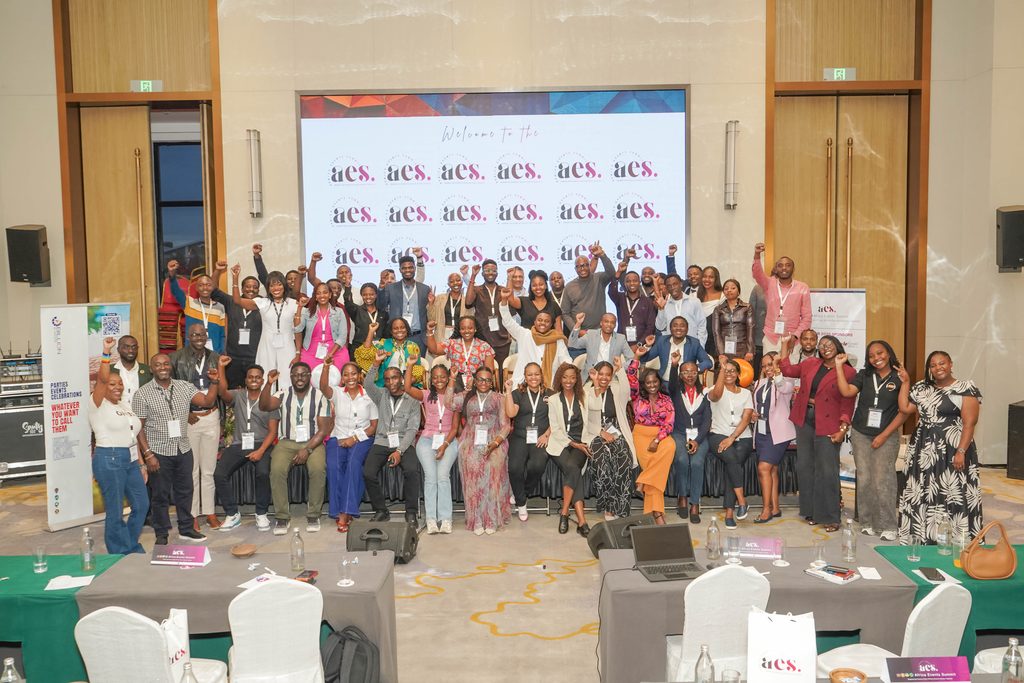
Table of Contents
THE BEGINNING
A Room That Had Never Existed Before
For years, the professionals who build East Africa’s biggest stages, dinners, festivals and launches operated in the same industry without a platform to share what they knew, standardise how they worked, or hold each other — and their clients — to a common standard. The Africa Events Summit 2026, held on 10 and 11 September at Argyle Grand Hotel in Nairobi, was the first serious attempt to change that.
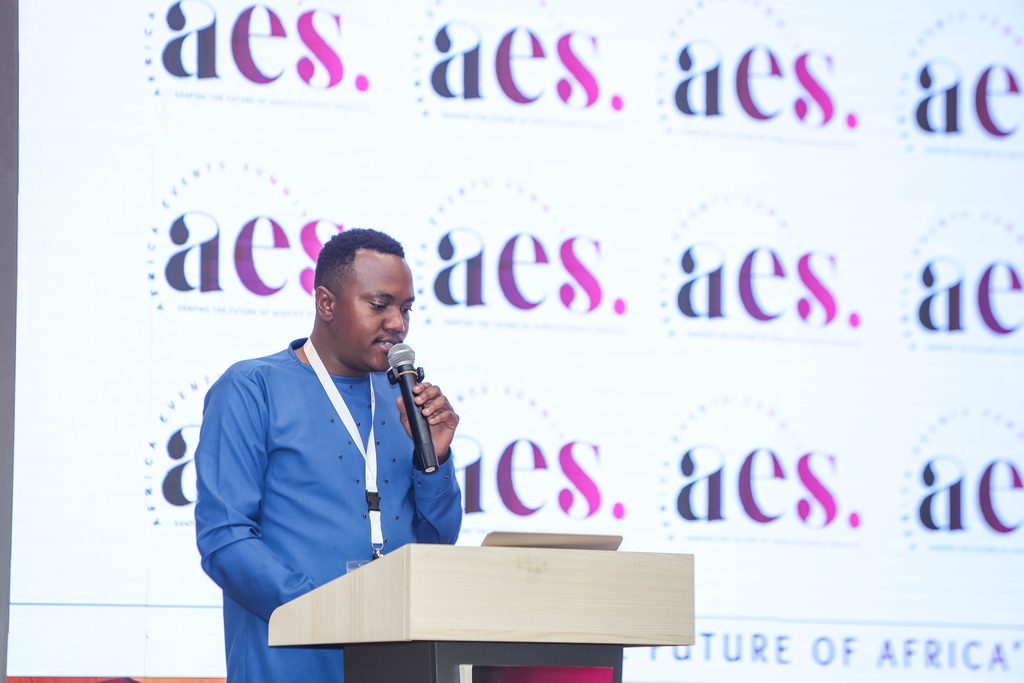
The Summit was convened by Ian Migwi, Founder and CEO of Billion Events, who has spent years making the case that the region’s events ecosystem has a connection problem, not a capability problem. His argument, stated plainly in his welcome address to delegates on Day 1, set the tone for everything that followed.
“We are not lacking on ideas. We are not lacking on solutions. We are not lacking on talent. What we have is a connection problem.”
— Ian Migwi, Founder & CEO, Billion Events, and Convener of the Africa Events Summit
Migwi used an extended metaphor to describe the industry’s dysfunction — one that landed with unusual directness in a room of practitioners who had lived the reality he was describing.
“We were all children of the same mother eating from the same table. The food is enough for all of us. But the problem you’re having is that someone wants to eat breakfast, they want to eat dinner, they want to eat lunch all at the same time. And instead of taking care of that table, we are snatching away the table.”
— Ian Migwi
The room that gathered for AES 2026 included event planners, security professionals, production companies, talent managers, venue operators, tourism officials, interpreters, audio engineers, florists, game designers, PR consultants, and finance directors. Kenya was the largest contingent, but the Summit drew practitioners from Uganda, Tanzania, Sierra Leone and the United Kingdom — making it genuinely regional in a way that previous industry gatherings in the region had not been.
Haddypro Co. Ltd flew their entire team from Tanzania. Jason Smith made the journey from Gloucester in the UK. Peter Igaga asked pointed questions from the floor on behalf of the Ugandan industry. It was, by every available measure, the broadest room the East African events industry had ever put together.
DAY 1
The Business of Events: Diagnosing What’s Wrong
Kenya Tourism Board Opens the Floor
The formal proceedings of Day 1 opened with an address from Fiona Ngesa, Market Development Lead at Kenya Tourism Board, who represented KTB CEO June Chepkemei. Her presence was itself a signal: this was not a trade show or a networking mixer. It was a conversation the state tourism agency had decided it needed to be part of.
Ngesa delivered hard numbers that framed everything that followed. Africa, she told the room, receives approximately five percent of global tourism. East Africa receives approximately two percent. Kenya’s destination awareness level has exceeded 80 percent for more than a decade. The problem — and she was direct about this — is not awareness.
“The conversation we are having now is beyond awareness. How do you convert that 80 percent to conversion?”
— Fiona Ngesa, Market Development Lead, Kenya Tourism Board
She confirmed that MICE and business travel accounts for 23 to 25 percent of arrivals into Kenya from the Asia markets she manages — a figure that made the Summit’s agenda feel less like an industry conversation and more like a national economic one.
Kingsley Litali: The Third Wheel
The Summit’s first masterclass was delivered by Kingsley Litali, CEO of Crimeshield Security Ltd, on event safety and security. His opening line was designed to provoke, and it did.
“Crowds don’t become dangerous because they are large. They become dangerous when systems fail to keep pace with their growth.”
— Kingsley Litali, CEO, Crimeshield Security Ltd
Litali’s argument was structural, not emotional. He introduced the DIM-ICE framework — Design, Information, Management, applied across Ingress, Circulation and Egress — as a practical tool for crowd management at any scale. He cited the 2026 World Cup Watch Party at the Kenyatta International Convention Centre as a proof point: more than 10,000 attendees, 54 recovered phones returned to their owners, one clean medical evacuation with no public incident.
The point was not to boast. The point was to demonstrate that this standard is achievable in Kenya, at scale, right now — and that most of the industry is nowhere near it.
“Security always comes as a third wheel. Yet the first person you meet when you’re going to any event is a security personnel. There is never a second chance for a first impression.”
— Kingsley Litali
Litali also disclosed that he is part of a Ministry of Interior working group currently drafting event security standards that are expected to proceed to Cabinet for potential enactment into law — a detail that moved the conversation from professional aspiration to regulatory reality.
The Opening Panel: Four Countries, One Uncomfortable Question
The Opening Panel, moderated by MC Ian Muiruri of Riannu Entertainment, brought together four voices from across the region for a two-hour examination of the question that the Summit was built around: where does East Africa’s event economy actually stand, and what’s stopping it from becoming what it could be?
Zaheeda Suleman of The Be Experience Company made the commercial case for events investment with a single case study. SafariCom’s Kenya Live tour represented a KSh 220 million investment. After the tour, the company’s average revenue per user moved from KSh 100 to KSh 425. The argument was precise: events are not a cost centre for corporations. They are a revenue mechanism — and the industry needs to stop selling itself as if it is the former.
Eric Mwanzia, Managing Director of The Arts Group Ltd and Chairman of EMAK, added Ministry of Tourism data that put the sector’s scale into context. Kenya hosted 12,000 business events last year, attracting 683,000 business travellers. The current-year target is 15,000 events and 780,000 travellers. He also disclosed the introduction of a new Class G licensing requirement for event management companies — the first signal that government is beginning to regulate the sector with any specificity.
Harold Mnkheni of Haddypro Co. Ltd in Tanzania and Khalhani Sichangi of KS Group Africa both returned, independently, to the same problem: undercutting. The practice of pricing below sustainable levels to win contracts is not merely a financial issue for individual businesses. It drives down quality, undermines safety standards, erodes client trust, and makes it impossible to build the professional reputation the industry needs to attract serious investment.
The conversation from the floor was equally direct. Peter Igaga from Uganda raised the cross-border collaboration problem. Elsie Lutuka of AVSIE pointed to the trust gap between vendors. Immaculate of BM Security pushed on professional standards. By the time the panel concluded, the diagnosis was clear: the industry’s problems are not unique to any one country, and they cannot be solved by any one country operating alone.
“We need to communicate very strongly to the end user, to the clients, what we need: the value proposition, as opposed to doing price wars — and changing the perception from vendor to supplier, looking at ourselves as a strategic partner to the clients that we engage.”
— Ian Muiruri, MC, reflecting the panel’s central conclusion
AVSIE: The Language of Professional Events
On the exhibitor floor, AVSIE’s Elsie Lutuka walked delegates through simultaneous interpretation and translation services — the same capability deployed by the team at COP30 in Brazil. Her demonstration was a live proof that professional-grade services are available in Nairobi right now, for events of any size and any linguistic profile. It was also a reminder that world-class events are built from many specialist components, not assembled by one generalist company.
The Industry Exercise: Building an Event in an Afternoon
Day 1 closed with a practical exercise that tested the Summit’s own thesis. Delegates were divided into seven working groups and handed a single client brief: design a flagship East African event, KSh 10 million budget, 1,000 to 1,500 attendees. Each group owned one component — concept, venue, programme, entertainment, production, budget, or marketing. They had one afternoon.
The results were presented to the full room, with open critique from the floor. Litali challenged the presentations immediately: none of the groups had built in a bomb-sweep or perimeter-security provision. The floor pushed back on the heavy reliance on sponsorship in several groups’ budget models, questioning whether events that cannot fund themselves without corporate backing are economically sustainable. The cross-group collaboration mechanism — where groups were supposed to share information and negotiate interdependencies in real time — was widely acknowledged to have been underused.
The exercise was designed to produce collaboration. It revealed, in live time, exactly the silo behaviour the Summit had convened to address. Which was, in its own way, the most important outcome of the afternoon.
Ian Migwi used the exercise’s results to close Day 1 with a challenge to the room on the industry’s relationship with value and price.
“We have a perception problem, not a budget problem.”
— Ian Migwi
DAY 2
Alignment and Direction: Building What Comes Next
Day 2 opened under a different heading — Alignment and Direction — and the shift was deliberate. Where Day 1 had named the problems, Day 2 was built around the question of what to do about them.
Faith Mulwa, Finance and Admin Director at Billion Events, delivered the Day 2 welcome note with an argument that the room had started but not yet finished. Her point: a world-class event is not one excellent component surrounded by adequate ones. It is a value chain that holds at every link. When one link fails, the entire event fails in the memory of everyone who experienced it. The industry’s collaboration problem is not an ethical failure. It is a commercial one.
“Imagine a point where we can all get to where we are collaborating and working together as an ecosystem together. What will happen, especially for delegates coming from outside the country, is we are shaping how they see Kenya and East Africa as an events destination. If the experience was terrible, then they start thinking that maybe Kenya is not the best place to hold an event.”
— Faith Mulwa, Finance & Admin Director, Billion Events
Musa Wesutsa: The Value Stick
The Day 2 opening masterclass was delivered by Musa Wesutsa, Strategy and Technology Director at Billion Events. His session, titled The Future of the Experience Economy in Africa: Strategy and Structure, opened with a photograph: the Han River in Seoul, photographed in 1961, and the same river photographed in the early 2000s. Forty years. Transformation that was not incremental, but intentional.
Wesutsa’s central framework was the Value Stick — a way of visualising the gap between what a customer is willing to pay and the cost of producing an event, and understanding how value is created, captured and distributed between organisers, suppliers and clients.
His argument was that the industry is caught in a race to the bottom because it competes on price rather than building the kind of psychological value that justifies premium positioning. He cited Apple’s iPhone not as a technology product but as a status symbol — a product that has built enough psychological value that customers pay a premium not because of its functional performance but because of what owning it signals about them. His challenge to the room: what would it mean for East Africa’s events industry to build that kind of value?
“Don’t rush to: ‘If you want to get value for this customer, then I have to be the cheapest guy in the room.’ Because then what happens is we get into a competition for who’s going to be the first person to reach the bottom.”
— Musa Wesutsa, Strategy & Technology Director, Billion Events
He used the YouTube founders — who sold in 2006 for $1.6 billion to a company that has since made the platform worth more than $400 billion — to argue that collaboration and partnership are not acts of generosity. They are acts of strategy. You do not lose what you never could have built alone.
His closing line landed quietly and stayed in the room.
“People are coming here and they’re giving you a part of their lives. They’re giving you their time. What are you giving them back? You need to give them back some memories.”
— Musa Wesutsa
Jason Smith: What’s Underneath the Blanket
The breakout session on Delivery, Infrastructure and Systems was facilitated by Jason Smith, Founder and CEO of Devoted Events Management in Gloucester, UK. Smith has spent 24 years in the events industry and currently spends 44 weeks of the year training young event professionals in partnership with Warner Bros. Studio — giving them real-world experience at UK festival sites free of charge. He opened his session by making a distinction that shaped everything that followed.
“The audience naturally judges the event by what they see — the production, the artists, the experience. But world class isn’t just what the audience sees. It’s what happens underneath the blanket.”
— Jason Smith, Founder & CEO, Devoted Events Management
He used a real case study from 2026: a 19,000-capacity stadium concert at King’s Own Stadium in his home city of Gloucester. He walked delegates through the decisions that made the event viable — stage placement requiring simultaneous consideration of sight lines, vehicle access routes, power supply, audience flow, emergency exit positions, rigging load requirements, noise propagation and cost. He described the flooring infrastructure required to allow 33-tonne Arctic trucks to access a grass pitch without destroying it. He explained how each gate and emergency exit position affects the legal maximum capacity of the event.
None of this was theoretical. It was the engineering of a specific event, in a specific venue, with a specific client. The point was simple: world-class events are built on documented, transferable, system-level thinking — and East Africa’s industry is operating largely without it.
He introduced the Event Management Plan — the 90-page planning document that is standard in the UK, submitted to a Safety Advisory Group before any event proceeds, covering every department, every supplier, every contingency, and every responsible individual. He contrasted this with what the room had been working with: single-page documents that exist only in the head of the person who wrote them.
A delegate put the implication plainly: if you started this summit and the person who built the plan did not make it to the day, someone else should be able to pick up that document and execute. That is the standard. That is what the industry is building toward.
Jason closed his session with three challenges to the room. The first was to invest in the next generation of event professionals before they develop bad habits from working in a broken system. The second was to act on collaboration — not to talk about it and then go back to silos. The third was the most striking.
“If you guys get all that right, the West will have issues because everybody will be coming to Africa for events. You guys are very creative. You’ve got all the resources here — the talent, the creativity, the fight, the drive. You’ve got everything here. If you get all that right, I’m telling you from now, everybody I know from the UK would fly here for events.”
— Jason Smith
The Closing Panel: What Must Happen Next
The closing fireside panel, moderated by Simon Peter — MICE Analyst and Kenya MICE Ambassador at MICE Diary — opened with a commitment that sharpened the stakes of everything the room was about to say.
“Whatever we are going to discuss here is going to form the declaration and the feedback that we are going to have in this panel is going to be presented to the Principal Secretary of Tourism.”
— Simon Peter, MICE Analyst, MICE Diary
The four panellists — Lynne The Brand of Foli Agency, Danson Njuguna of Events and Promotions Group Ltd, Denise Kibisu-Ngibuini of Cogwheel Experience Studios, and Jeffers Miruka of the Association for Kenya Business Events — represented between them more than 70 years of combined experience in the industry. Their conversation covered digital brand building, business continuity, the talent management ecosystem, the Convention Bureau, and the generational transfer of knowledge. Several threads ran through all of it.
On digital presence and brand building:
Lynne The Brand argued that an event company’s social media pages are now its portfolio and its CV — the first thing sponsors and corporate clients check before committing. Her advice to early-stage companies without a marketing budget: start with what you have.
“You start with what you have to get what you want. Those digital spaces are our CVs, our portfolios. So that’s the first place that a sponsor or corporate will go and they’ll try to see what you’ve been doing.”
— Lynne The Brand (Linda Fula), CEO, Foli Agency
On building companies that outlast their founders:
Danson Njuguna, who has run Events and Promotions Group Ltd for 23 years, made the case for systems and structures with a challenge the room took personally.
“If today I drop dead today, what happens to my business? Will I go with it? Or will it continue?”
— Danson Njuguna, Founder & CEO, Events and Promotions Group Ltd
He described the construction of independent project teams that can run full production cycles without daily input from him — freeing him to pursue new business rather than manage existing work. His argument was that the industry’s fragmentation is partly structural: too many founders who are indispensable to their own companies, and therefore incapable of scaling.
On the Convention Bureau — Kenya’s 13-year wait:
The most policy-significant contribution of the closing panel came from Jeffers Miruka. He disclosed that Kenya has ranked number two in Africa for international business events in the ICCA rankings for 13 consecutive years — without a functional convention bureau. Two serious attempts to establish the bureau have both collapsed due to ministerial transfers.
“Kenya has what it takes. But what we don’t have is a cohesive, non-fragmented way of ensuring that we can actually go out there and speak with one voice. Can you imagine if an RFP comes and you get three bids from one destination — one from KICC, one from KTB, one from Bomas? That person who wants to bring this major event receives three bids and thinks: is there anything that can come out of this destination?”
— Jeffers Miruka, Secretary General, Association for Kenya Business Events (AKBE)
He noted that Rwanda’s convention bureau is a significant factor in that country’s ability to compete for international events — and that Kenya’s repeated failure to establish one is not a capability gap but a coordination and political follow-through failure.
On AES as an accreditation body:
The most structurally ambitious idea of the entire Summit came not from a panellist but from the floor, during Ian Migwi’s closing address. Benjamin Otwal, Music Executive & Talent Manager — who had delivered the Experience and Creative Alignment masterclass — proposed that AES should become the region’s events industry accreditation body.
“If AES becomes the accreditor, then it’s easier for a client to be like: if you’re not AES certified, if you’re not AES accredited, then I’m sorry, we’ll go for someone else who is. So that way we are able to set what good security looks like at an event, what good planning looks like, what good production looks like — and build an accreditation system that becomes the industry standard.”
— Benjamin Otwal, Music Executive & Talent Manager
On what the industry must leave behind:
Denise Kibisu-Ngibuini’s closing statement was one of the sharpest of the two days.
“Events is us and us is events. We just need to make it work somehow. This habit of rocking up one day and saying ‘I’m an event manager’ — let us stop that. Let us learn the business of it. Respect the craft. Respect the amount of effort that is put together to create a wholesome experience, and respect the people who do it.”
— Denise Kibisu-Ngibuini, Founder & CEO, Cogwheel Experience Studios
Steve Omondi, Deputy Director for Business Tourism and Events at Kenya Tourism Board, addressed the room toward the close of the panel and announced the formation of a KTB-initiated MICE Club — a private-sector-led body with interim leadership in place and a constitution currently being drafted. The Club’s stated purpose: shared information, joint bidding, capacity building, and coordinated promotion — the infrastructure for a unified industry voice that the Convention Bureau conversation had shown is currently missing.
THE COMMITMENTS
Five Next Moves: What AES Has Committed To
Ian Migwi closed the Africa Events Summit 2026 with an address that named what came next — not as aspiration but as commitment. He collected contributions from the floor, organised them against the emerging architecture of the Summit’s work, and announced five named moves that the AES Secretariat and its founding committee have put on record.
01 — Build: The Institution
AES will be decentralised from Billion Events and established as an independent, industry-governed platform. A formal Founding Committee has been constituted with representation from Kenya, Uganda, Tanzania and Rwanda. The committee carries responsibility and accountability — and will be the body that carries the work forward regardless of who convened the first Summit.
“AES is not created because I believe I have all the answers, or I believe Billion Events have all the answers. No single company actually has those answers. The idea was to create a room where people who are actually building this industry could come together and start finding those answers collectively.”
— Ian Migwi
02 — Connect: The Industry
The infrastructure for year-round connection will be built. This includes masterclasses — with Yamaha committed to training audio engineers and MA Lighting committed to training lighting engineers across the region — industry breakfast sessions held in-country, and a representation pathway for young professionals who are not yet at the table. The WhatsApp Channel for the AES East Africa Chapter is live. A formal group link and digital platform will follow.
03 — Trust: The Ecosystem
Three concrete deliverables have been named. First, an Event Management Plan template, developed in collaboration with Jason Smith, free and accessible to every operator in the region, adapted for the East African context. Second, a Safety Advisory Group, drawing on Kingsley Litali and Crimeshield Security, to advise on events before they proceed — beginning the process of industry self-regulation rather than waiting for legislation to impose it. Third, a verified industry directory — Discover, Verify, Review, Recognise — so that the industry can hold itself and its clients to a documented standard.
“We will work with Jason on coming up with some sort of template for an event management plan that can be easily accessible to everyone. It’s not going to be developed by one person. We have to make it work for this particular environment.”
— Ian Migwi
04 — Learn: The Knowledge
East Africa’s equivalent of the UK’s Purple Guide — a living, industry-written reference covering safety standards, capacity planning, crowd management, production requirements and event planning methodology — will be built as a publicly accessible resource on the AES platform. The full Summit report, drawing on two days of proceedings, will be submitted to the relevant government bodies in all four countries. The purpose is explicitly stated: to inform policy, not to petition for it.
“We are not taking these things to the government to rely on them to help us. We seek support because we need the support of those institutions.”
— Ian Migwi
05 — Expand: The Region
AES will rotate host cities. Tanzania, Rwanda and Uganda are all being considered for future editions. The criteria for selecting the next host city will be set by the Founding Committee and published — so that the decision is not political but meritocratic. Migwi’s challenge to close the Summit was bold: he proposed a regional concert circuit — five days in Uganda, five days in Kenya, five days in Rwanda, five days in Tanzania — as the kind of project the industry could now, for the first time, actually execute together.
“It’s very possible,” he said. “It’s extremely possible — because we just need to have everyone in this room contribute to the specific things. Then we look at all the margins and we change the entire ecosystem.”
THE GALA
The Gold Soirée: A Night That Felt Like the Industry It’s Trying to Build
The Gala Dinner, powered by The Bar, EABL, closed the Africa Events Summit 2026 with a Gold Soirée — an open bar, a red carpet, entertainment by Ruthy and the Artzone team, and a formal awards and recognition ceremony that was, in its own way, a demonstration of exactly what the Summit had been arguing for across two days.
The King and Queen of the Night were Benjamin Otwal and Denise Kibisu-Ngibuini of Cogwheel Experience Studios. Haddypro Co. Ltd was named Biggest Team Investor — recognition of a company that flew its entire team from Tanzania to be in the room. AVSIE Rental, The Bar and Billion Events each received recognition trophies. Every masterclass facilitator and panellist received a Certificate of Appreciation, signed by Ian Migwi on behalf of the Summit.
The Founding Committee raised a toast. The room, which had spent two days being honest about everything that was wrong with the industry they work in, spent the evening celebrating everything it could become.
WHAT IT ALL MEANS
East Africa’s Events Industry Has Named Its Problem — and Started Building the Answer
The Africa Events Summit 2026 was not a conference in the conventional sense. It was a diagnostic, a design session, and a commitment ceremony compressed into two days. The industry that gathered at Argyle Grand Hotel on 10 September was not the same one that left on the evening of 11 September.
Several things can be said about what the Summit produced that were not true before it happened. There is now a shared record, on the table, of where the East African events industry actually stands — with real statistics, real case studies, real problems named by the people who live with them. There is now a Founding Committee with named representatives from four countries and a mandate to carry the work forward. There is now a commitment, on the record, to build an Event Management Plan template, a Safety Advisory Group, and an East African knowledge base — not to study whether these things should exist, but to build them.
There is also a commitment, stated in public, by the convener of the Summit himself, to decentralise AES from the company that created it and turn it into an institution that belongs to the industry. That is not a small thing to say. It is an even harder thing to do. The Summit’s credibility, over the next twelve months, will be measured by whether the five named moves produce tangible outputs — not by how good the two days in Nairobi were.
But the two days in Nairobi were good. Genuinely good, in ways that are not easy to manufacture. The conversation was honest. The room held. The questions from the floor were harder than the answers from the stage, which is how it should be. A UK events professional told a room of East African practitioners that the West will have a problem when this region figures out what it has. A Tanzanian MD flew his whole team across the border to be there. A floor delegate proposed that AES become the region’s accreditation body — an idea that hadn’t been in anyone’s prepared remarks.
That is not a conference. That is the beginning of an institution.
The Africa Events Summit 2026 concluded with every delegate asked to stand, find three people they had not come with, take their contacts, and say one sentence.
Tell them it was good to have you at AES 2026. I’ll see you at AES 2027.
ACKNOWLEDGEMENTS
With Gratitude
The Africa Events Summit 2026 was made possible by the organisations and individuals who committed their resources, their time and their reputations to a vision before it had proven itself.
Sponsors
Argyle Grand Hotel — for hosting the Summit across both days with the standards it preaches. AVSIE Rental — for professional interpretation and language services that made the Summit’s multilingual ambitions possible. The Bar, EABL — for powering the Gold Soirée Gala Dinner. Billion Events — for convening and producing the inaugural edition.
Strategic Partners
Kenya Tourism Board and Magical Kenya — for lending institutional weight to an industry conversation that government needs to be part of. Blooms and Gifts Kenya — for the floral styling that filled the conference and the gala floor. Sauti Events and Sauty Integration — for sound production across both days and the gala. OROK Audio — for exhibiting and demonstrating what Kenyan-made consumer sound equipment looks like at its best. Morart Games Kenya — for the games that kept the exhibitor floor alive and the gala dinner human. Sound Fusion — for the lighting and atmosphere that made the environment feel like the industry it was serving. Foli Agency — for PR support and communications. Crimeshield Security Ltd — for professional event security that practised what the masterclass preached.
Speakers, Panellists and Facilitators
Fiona Ngesa, Kingsley Litali, Zaheeda Suleman, Harold Mnkheni, Eric Mwanzia, Khalhani Sichangi, Faith Mulwa, Musa Wesutsa, Jason Smith, Anne Ngatia, Benjamin Otwal, Lynne The Brand, Danson Njuguna, Denise Kibisu-Ngibuini, Jeffers Miruka, Simon Peter, Steve Omondi, and MC Ian Muiruri.
Every Delegate Who Showed Up
From Kenya, Uganda, Tanzania, Sierra Leone and the United Kingdom. You made this room what it was.
AFRICA EVENTS SUMMIT 2026
Building East Africa’s Event Economy: Decisions. Direction. Alignment.
www.billioneventsea.com/africaeventssummit • aes@billioneventsea.com
#AfricaEventsSummit #AES2026 #EastAfrica #EventsIndustry #MICEKenya
Leave a reply